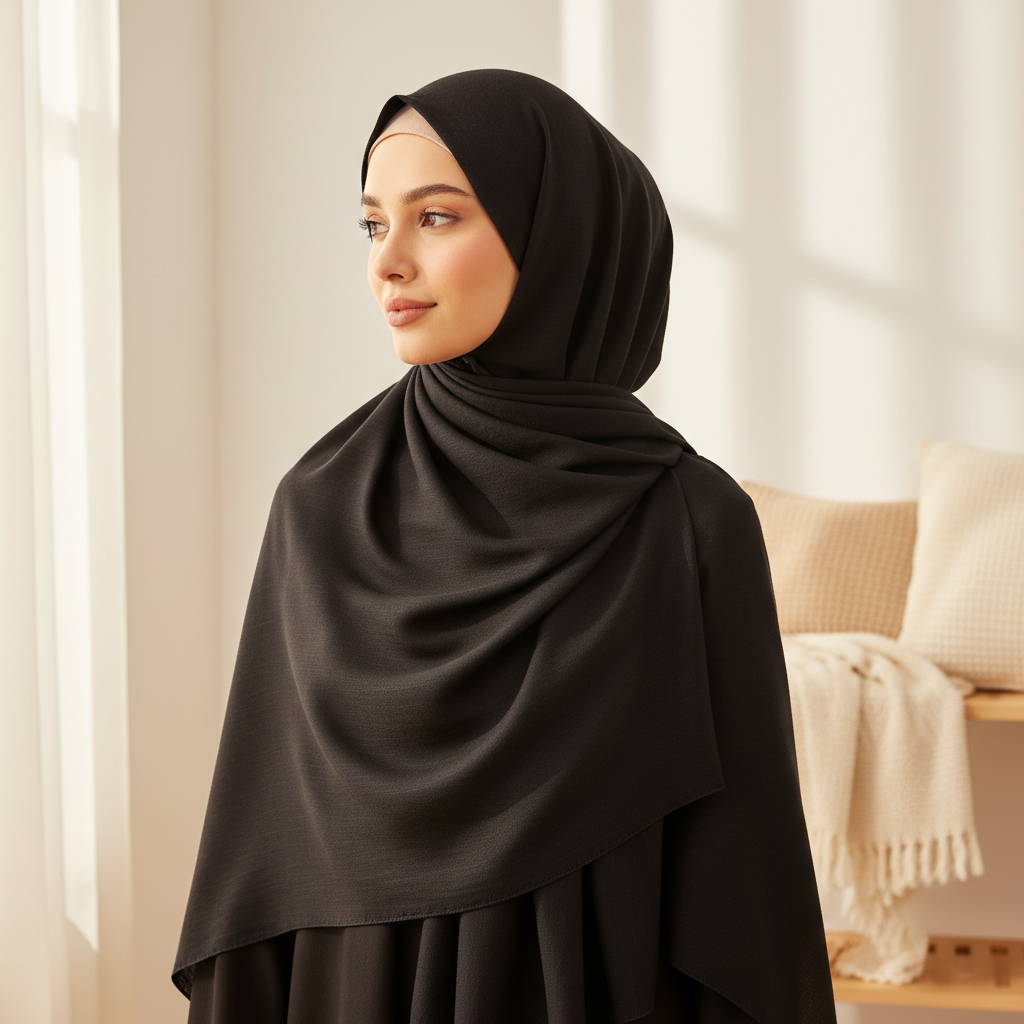
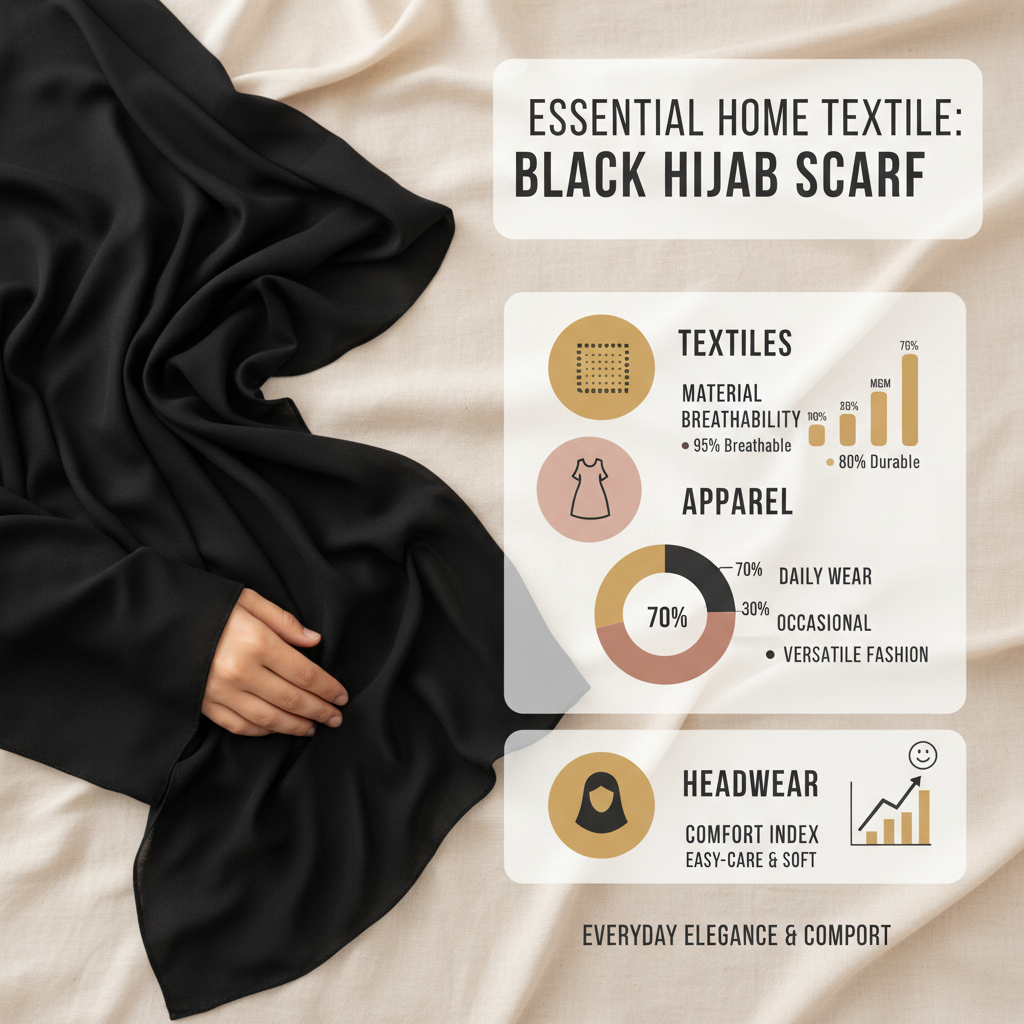
The black hijab scarf stands as a timeless cornerstone of modest fashion, blending cultural significance with universal aesthetic appeal. In the global textile industry, the demand for high-quality black headcoverings remains consistent, driven by their versatility and the profound symbolic value they hold for millions of women worldwide. Understanding the nuances of fabric selection and dye precision is essential for ensuring a product that meets both religious standards and modern comfort requirements.
From a manufacturing perspective, producing a premium black hijab scarf requires a deep dive into the chemistry of dyeing and the physics of fabric drape. Whether utilizing the lightweight breathability of Chiffon or the luxurious sheen of Satin, the goal is to achieve a "true black" that resists fading and maintains its integrity through repeated wear. This intersection of textile engineering and cultural expression creates a unique market segment where quality is measured not just by durability, but by the dignity it provides the wearer.
As global fashion trends lean towards sustainable and inclusive design, the black hijab scarf has evolved from a basic necessity into a sophisticated accessory. By integrating advanced finishing techniques and eco-friendly dyes, manufacturers can now offer products that are as gentle on the skin as they are on the planet. This comprehensive guide explores the technical and commercial dimensions of this essential garment, providing insights into why it remains an indispensable element of the modern wardrobe.
The Global Significance of Black Hijab Scarves
The global relevance of the black hijab scarf extends far beyond simple fashion; it is a manifestation of identity, faith, and professionalism. With the global Muslim population projected to grow significantly by 2050, according to Pew Research data, the demand for high-quality modest wear has shifted from niche markets to mainstream textile production. The challenge for manufacturers lies in balancing the traditional requirements of opacity and coverage with the modern need for lightweight, breathable fabrics that can withstand various climates.
In many urban centers from Jakarta to London, the black hijab is the gold standard for formal and business attire. It addresses the problem of versatility, allowing the wearer to transition seamlessly from a professional boardroom setting to a religious gathering. By focusing on the structural integrity of the weave and the depth of the black pigment, the industry ensures that these scarves provide not only modesty but also a sense of confidence and empowerment for women in all spheres of public life.
Technical Specifications of Premium Fabrics
When selecting materials for a black hijab scarf, the textile engineer must prioritize the "hand-feel" and the drape. Chiffon is often favored for its ethereal transparency and lightness, though for hijabs, a higher-density weave is required to ensure sufficient opacity. Voile, on the other hand, offers a matte finish and superior breathability, making it the ideal choice for warmer climates where air circulation is paramount to prevent heat exhaustion.
Satin fabrics provide a luxurious alternative, offering a high-luster surface that reflects light, which can make a black scarf appear more dynamic and formal. The challenge with satin is the "slip" factor; therefore, blending synthetic fibers with a touch of natural elasticity can help the scarf stay in place without the need for excessive pinning. This technical balance between aesthetic sheen and practical stability is what defines a premium-grade product.
Furthermore, the integration of Sudan Toub-style weaving techniques allows for larger, more versatile wraps that offer comprehensive coverage. By manipulating the thread count and the tension of the loom, manufacturers can create a fabric that is durable enough for daily wear but soft enough to avoid irritating the skin. This attention to technical detail ensures that the garment serves its purpose while maximizing user comfort.
Dyeing Precision and Color Fastness
Achieving a deep, consistent hue for a black hijab scarf is one of the most demanding processes in the dyeing industry. Standard black dyes can often lean toward blue or brown undertones; therefore, a precise mixture of reactive dyes is used to ensure a "neutral black." This process involves multiple immersion cycles and controlled temperature environments to ensure the pigment penetrates the core of every fiber.
Color fastness is a critical KPI for any black hijab scarf. Using ISO 105-C06 standards for washing and rubbing fastness, manufacturers test whether the black pigment bleeds onto other clothing or fades under UV exposure. Advanced fixation agents are applied during the final rinse to lock the dye into the fabric, preventing the common issue of "graying" after several washes.
Moreover, the environmental impact of dyeing black fabrics is significant due to the high volume of dyestuffs required. Modern facilities are now adopting low-liquor ratio dyeing machines and closed-loop water filtration systems to reduce chemical waste. This shift ensures that the production of the black hijab scarf is not only high in quality but also aligned with global ESG (Environmental, Social, and Governance) goals.
Performance Metrics by Material Type
To objectively evaluate the performance of different materials used in a black hijab scarf, we look at four key dimensions: breathability, opacity, drape, and durability. While a Chiffon version might score exceptionally high in drape, it may require layering to achieve the desired opacity. Conversely, a Voile scarf offers peak breathability, which is essential for daily outdoor use in tropical regions.
Understanding these metrics allows consumers and wholesalers to choose the right product for their specific demographic. For instance, a satin-finish scarf is the optimal choice for evening wear due to its high aesthetic rating, whereas a blended cotton-voile is superior for athletic or casual settings. The following data visualizes how these different material approaches perform across key user-experience categories.
Material Performance Rating for Black Hijab Scarves
Global Market Applications and Use Cases
The application of the black hijab scarf varies significantly by region. In the Gulf Cooperation Council (GCC) countries, there is a high preference for ultra-black, lightweight fabrics that provide maximum sun protection while remaining breathable. Here, the focus is on the "opacity-to-weight" ratio, ensuring the fabric is not see-through despite being thin enough to wear in 40°C heat.
In Western markets, such as North America and Europe, the black hijab is often integrated into "modest-chic" professional wardrobes. It is frequently paired with blazers and corporate attire, where the focus shifts toward the crispness of the edges and the lack of wrinkles. In these contexts, the scarf serves as a bridge between religious observance and modern corporate identity, emphasizing a polished, sophisticated appearance.
Long-term Value and Sustainability
Investing in a high-quality black hijab scarf provides long-term value through durability and timelessness. Unlike seasonal colors that go out of style, black is permanently relevant. When manufactured with high-tenacity yarns and premium dyes, these scarves can last for years without losing their shape or color, reducing the need for frequent replacements and lowering the overall cost per wear.
From a sustainability angle, the industry is moving toward recycled polyester and organic cotton blends. By utilizing "green" chemistry in the dyeing process, brands can reduce the toxic runoff typically associated with black pigments. This not only protects the waterways in manufacturing hubs but also appeals to the growing demographic of eco-conscious consumers who want their modest wear to reflect their ethical values.
Ultimately, the value of a premium scarf is found in the peace of mind it gives the wearer. Knowing that the fabric will not slip, fade, or cause skin irritation allows for a focus on daily activities rather than the garment itself. This reliability builds a deep level of trust between the manufacturer and the end-user, fostering long-term brand loyalty.
Future Innovations in Modest Textiles
The future of the black hijab scarf lies in the integration of "smart textiles." We are seeing the emergence of fabrics infused with UV-blocking nanoparticles that provide active protection against harmful rays without adding weight to the fabric. Additionally, moisture-wicking technology, borrowed from athletic wear, is being integrated into daily hijabs to ensure the wearer stays cool and dry regardless of the humidity.
Digital transformation is also playing a role, with 3D knitting technology allowing for seamless edges that eliminate the need for traditional hemming. This reduces material waste and creates a cleaner, more modern silhouette. Automation in the dyeing process is further ensuring that every batch of black fabric is identical, eliminating the "shading" discrepancies that often plague large-scale textile production.
As we move forward, the focus will shift toward circularity—creating scarves that are fully biodegradable or easily recyclable. The goal is to maintain the elegance and modesty of the black hijab while ensuring that its lifecycle has a net-zero impact on the environment.
Technical Comparison of Black Hijab Scarf Material Innovations
| Material Innovation |
Breathability Score |
Color Depth |
Eco-Impact |
| Recycled Poly-Chiffon |
8/10 |
High |
Low Carbon |
| UV-Protected Voile |
10/10 |
Medium |
Moderate |
| Organic Cotton-Jersey |
9/10 |
Deep Matte |
Very Low |
| Bamboo-Satin Blend |
7/10 |
Lustrous Black |
Low |
| Smart-Cool Georgette |
9/10 |
High |
Moderate |
| Nano-Silver Anti-Odor |
8/10 |
High |
Moderate |
FAQS
For hot climates, Voile or lightweight Chiffon are the best choices. Voile is particularly praised for its matte finish and high breathability, which allows air to circulate and prevents overheating. When choosing a black hijab scarf for summer, look for "breathable" or "air-weave" labels to ensure maximum comfort.
To maintain the deep black hue, always wash your scarf in cold water using a mild detergent specifically designed for dark colors. Avoid direct sunlight when drying, as UV rays can break down the dye molecules. Using a vinegar rinse during the first wash can also help set the dye and improve color fastness.
While satin is stunning, it is often more suited for formal events or evening wear due to its high sheen. For daily professional wear, a high-quality matte Chiffon or a premium Georgette black hijab scarf is typically preferred as it looks more understated and polished in a corporate environment.
Opacity is determined by the thread count and the weave density. A simple test is to hold the fabric up to a bright light source; if you can see the outline of your hand clearly through the fabric, it may require layering. Premium black hijab scarves use a tighter weave to ensure modesty without sacrificing lightness.
Yes, many manufacturers are now using recycled polyester (rPET) and organic bamboo fibers. These materials reduce the environmental footprint of production. Additionally, look for scarves certified by OEKO-TEX, which ensures the black dyes used are free from harmful chemicals and safe for the skin.
Jersey fabric is generally the easiest for beginners because it is stretchy and "grips" the head, meaning it stays in place without as many pins. Once you are comfortable with styling, you can transition to Chiffon or Satin black hijab scarves, which offer more elegant drapes but require more precision in pinning.
Conclusion
The black hijab scarf is far more than a garment; it is a sophisticated blend of textile science, cultural identity, and timeless fashion. From the precision of neutral-black dyeing to the selection of high-performance fabrics like Chiffon and Voile, every detail contributes to a product that provides dignity, comfort, and style. By prioritizing quality and sustainability, manufacturers can ensure that this essential accessory continues to empower women globally.
Looking ahead, the integration of smart textiles and circular economy practices will redefine the modest wear industry. We encourage consumers to invest in premium, durable materials that offer long-term value and a lower environmental impact. Whether for professional success or personal expression, the right black hijab scarf is an investment in oneself. Visit our website for more high-quality options: www.wwscarf.com