Your Trusted 24 Hours Service Provider!
0%

Table of Contents

The arabic head wrap, deeply rooted in cultural traditions across the Arab world and beyond, is more than just a piece of cloth. It represents identity, modesty, faith, and social status. Understanding its history, variations, and contemporary uses is crucial in a globalized world where intercultural sensitivity and respect are paramount. This knowledge fosters appreciation for diverse practices and challenges preconceived notions, promoting inclusivity and understanding in various spheres of life. The increasing global interconnectedness underscores the importance of comprehending such cultural symbols and their significance.

Across different regions and communities, the arabic head wrap takes on a multitude of forms, each reflecting local customs and aesthetic preferences. From the simple elegance of a plain shawl to the elaborate ornamentation of a wedding headpiece, these coverings serve as potent expressions of personal and collective identity. The availability of diverse materials, colors, and styles has also fuelled a growing fashion trend, integrating the arabic head wrap into mainstream attire. This has also spurred discussions around cultural appropriation and the importance of respectful engagement.

The study of the arabic head wrap provides valuable insights into sociological trends and evolving cultural norms. It’s a tangible symbol that connects the past to the present and shapes the future of identity expression. As global communication continues to expand, the understanding of this tradition becomes increasingly relevant for designers, policymakers, and individuals seeking to appreciate the richness and complexity of human culture. Furthermore, the economic impact of the arabic head wrap industry, from textile production to retail, is a significant factor in many economies.
Exploring the Cultural Significance and Modern Fashion of the Arabic Head Wrap

The Cultural Significance of arabic head wrap

Exploring the Cultural Significance and Modern Fashion of the Arabic Head Wrap

The arabic head wrap is far more than a simple garment; it’s a profound symbol interwoven with cultural narratives and societal norms. Throughout history, it has served as a marker of identity, distinguishing tribal affiliation, social standing, and religious commitment. For many, the arabic head wrap embodies modesty and privacy, representing a reverence for traditional values.

Its symbolism transcends mere physical covering. It can signify a woman’s marital status, her region of origin, and her adherence to specific cultural practices. The intricate designs and vibrant colors often communicate subtle messages within the community, acting as a nonverbal language of belonging and respect. Understanding these nuances is essential for appreciating the depth of its cultural importance.

Historical Evolution of the arabic head wrap

The history of the arabic head wrap stretches back centuries, predating the rise of Islam. Evidence suggests that forms of head covering were prevalent among women in the Middle East and surrounding regions long before the 7th century, often associated with status and protection from the elements. Early forms varied greatly depending on the region and social class, ranging from simple veils to elaborate headpieces adorned with jewelry.

With the advent of Islam, the interpretation and practice of head covering evolved. While the Quran does not explicitly mandate a specific style of head covering, verses pertaining to modesty influenced the adoption and development of various forms of the arabic head wrap. Over time, different communities developed unique styles reflecting their local traditions and interpretations of religious teachings.

The colonial period brought further changes, as Western influences impacted traditional practices. Despite attempts to suppress cultural expressions, the arabic head wrap persevered as a symbol of resistance and cultural identity. In the modern era, it continues to evolve, adapting to changing fashion trends while retaining its fundamental cultural significance.

Types and Styles of arabic head wrap

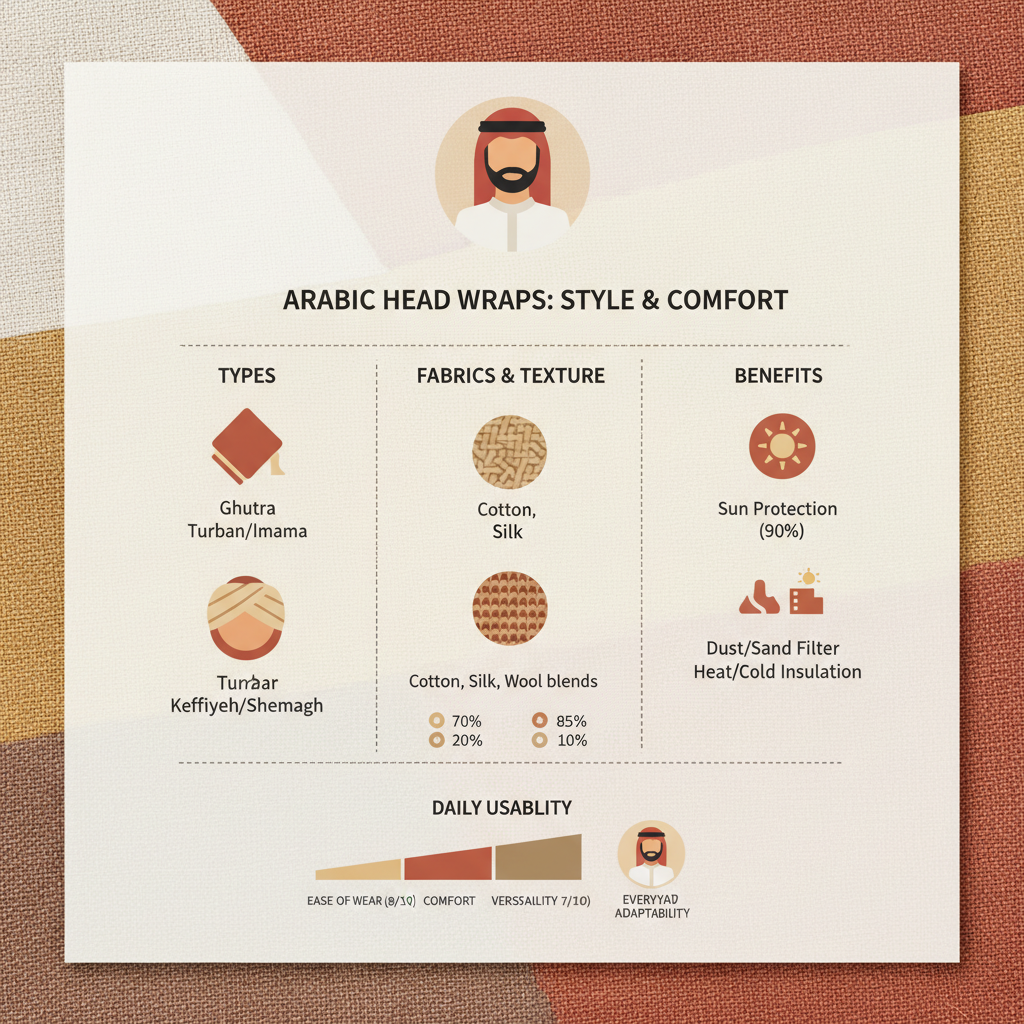
The arabic head wrap manifests itself in a dazzling array of styles, each with its unique history and cultural context. The hijab, perhaps the most recognizable form, generally covers the head and neck, leaving the face clear. The niqab adds a face veil, offering greater concealment, while the burqa encompasses the entire body, including the face, with a mesh screen for vision.

Beyond these commonly known styles, regional variations abound. The shayla is a long, rectangular scarf popular in the Gulf region, draped loosely over the head and shoulders. The al-amira is a two-piece veil consisting of a close-fitting cap and a scarf, offering a more secure and comfortable fit. Different techniques for tying and draping the fabric create further diversity, reflecting personal preferences and local fashion trends.

The evolution of the arabic head wrap is also influenced by contemporary fashion. Modern interpretations often incorporate vibrant colors, intricate patterns, and embellishments, showcasing the creativity and artistry of designers. Social media platforms have played a role in showcasing these diverse styles and fostering a sense of community among wearers.

Materials and Craftsmanship in arabic head wrap

The materials used in crafting an arabic head wrap greatly influence its appearance, comfort, and cost. Traditionally, natural fibers such as cotton, silk, and linen were favored for their breathability and luxurious feel. Cotton remains a popular choice for everyday wear, providing comfort and ease of care.

Quality Comparison of Arabic Head Wrap Materials


The Arabic Head Wrap in Modern Fashion

The arabic head wrap has experienced a significant resurgence in the fashion world, transcending its traditional boundaries and becoming a mainstream accessory. Designers are incorporating it into haute couture collections, experimenting with innovative fabrics, patterns, and embellishments.

This integration reflects a growing appreciation for diverse cultural expressions and a desire for modest fashion options. Influencers and celebrities have also played a crucial role in popularizing the arabic head wrap, showcasing its versatility and style. The availability of online retailers and social media platforms has further facilitated its accessibility and appeal.

Social and Religious Contexts of arabic head wrap

The decision to wear an arabic head wrap is often deeply personal and rooted in religious beliefs, cultural traditions, and individual expression. For many Muslim women, it represents a commitment to modesty and a connection to their faith. It’s a way to reclaim agency and challenge societal expectations.

However, the interpretation and practice of wearing the arabic head wrap vary widely across different communities and individuals. Some view it as obligatory, while others see it as a personal choice. The debate surrounding its significance often reflects broader discussions about women's rights, religious freedom, and cultural identity.

Understanding the diverse motivations and perspectives surrounding the arabic head wrap is essential for fostering respectful dialogue and challenging stereotypes. It is crucial to avoid generalizations and recognize that each individual's experience is unique.

Global Economic Impact of arabic head wrap Production

The production and trade of arabic head wrap generates substantial economic activity across numerous countries. From the cultivation of raw materials like cotton and silk to the manufacturing and retail sectors, the industry supports livelihoods and contributes to economic growth.

Major producing countries include Egypt, Turkey, Indonesia, and Saudi Arabia, each specializing in specific styles and materials. The export of arabic head wrap to global markets generates significant revenue, particularly for economies heavily reliant on textile industries. The rise of e-commerce has further expanded the market reach, connecting producers with consumers worldwide.

However, the industry also faces challenges such as ensuring fair labor practices, promoting sustainable production methods, and addressing issues related to intellectual property rights. Investing in ethical and environmentally responsible practices is crucial for ensuring the long-term sustainability and positive social impact of the arabic head wrap industry.

A Comparative Analysis of Economic Factors in Arabic Head Wrap Production

Country of Origin Production Cost (USD) Export Volume (Annual) Sustainability Rating (1-10)
Egypt $15 50 Million Units 6
Turkey $20 40 Million Units 7
Indonesia $12 35 Million Units 5
Saudi Arabia $25 25 Million Units 8
Malaysia $18 30 Million Units 7
UAE $30 20 Million Units 6

FAQS

What is the historical significance of the arabic head wrap?

The arabic head wrap boasts a rich history stretching back centuries, predating Islam. Initially, it signified status and protection from the elements. With the rise of Islam, its interpretation evolved, becoming associated with modesty and faith. Throughout history, it has adapted to changing cultural norms and remains a symbol of identity and tradition today, demonstrating resilience and cultural continuity.

How does the arabic head wrap differ across different cultures?

The arabic head wrap isn't a monolithic style. Different regions and communities exhibit unique variations. The hijab, niqab, burqa, shayla, and al-amira represent diverse approaches, differing in coverage and design. Local customs influence the colors, fabrics, and methods of draping, reflecting cultural nuances and personal preferences. Understanding these variations is vital for respecting cultural diversity.

What are the ethical considerations when purchasing an arabic head wrap?

Ethical sourcing is crucial. Consumers should consider factors like fair labor practices, sustainable materials, and transparent supply chains. Supporting brands that prioritize ethical production and worker well-being is vital. Choosing organic cotton or recycled fabrics contributes to environmental sustainability. Awareness of these issues ensures a responsible and ethical purchase.

How can I style an arabic head wrap in a modern fashion context?

The arabic head wrap is incredibly versatile. Experiment with different draping techniques, layering with other accessories, and incorporating it into various outfits. Modern interpretations often involve vibrant colors, prints, and embellishments. Social media provides abundant inspiration and styling ideas, allowing you to create a look that reflects your personal style and preferences.

What are the common misconceptions about women who wear arabic head wraps?

Many misconceptions exist, often fueled by media portrayals and stereotypes. It's crucial to recognize that wearing an arabic head wrap is a personal choice with diverse motivations. It doesn’t inherently indicate oppression or lack of agency. Women who choose to wear it do so for a multitude of reasons, including religious conviction, cultural pride, and personal expression. Challenging these stereotypes requires respectful dialogue and open-mindedness.

What is the economic impact of the arabic head wrap industry?

The arabic head wrap industry contributes significantly to the economies of producing countries like Egypt, Turkey, and Indonesia. It generates employment opportunities in textile manufacturing, design, and retail. Export revenue from arabic head wrap products represents a substantial economic impact. Supporting sustainable and ethical practices within this industry is essential for long-term economic growth and social responsibility.

Conclusion

In conclusion, the arabic head wrap is a multifaceted cultural artifact with a profound history, diverse interpretations, and significant global impact. From its origins as a symbol of status and protection to its contemporary role in fashion and identity expression, it continues to evolve while retaining its core cultural significance. Understanding its nuances fosters greater cultural awareness, respect, and inclusivity.

Looking ahead, continued research, ethical production practices, and open dialogue are essential for preserving the rich heritage of the arabic head wrap while promoting its positive social and economic contributions. By challenging stereotypes and embracing diversity, we can appreciate the beauty and complexity of this enduring cultural symbol and promote cross-cultural understanding. Explore our collection of arabic head wraps to discover the artistry and tradition firsthand.


Caleb Thompson

Caleb Thompson

Caleb Thompson is a Senior Designer at Xinji Weiwei Textile. He's at the forefront of creating innovative hijab and scarf designs, drawing inspiration from global fashion trends and customer feedback. Caleb specializes in fabric selection – voile, chiffon, satin – and incorporating unique printing techniques. He collaborates closely with the
Previous The Enduring Legacy of the Arafat Scarf A Symbol of Identity and Resistance
Next The Enduring Legacy of the Arab Scarf A Cultural and Fashion Icon