Your Trusted 24 Hours Service Provider!


Selecting a high-quality headscarf often involves a delicate balance between cultural authenticity, material breathability, and brand identity. Whether it is a traditional Shemagh for men or a delicate chiffon wrap for women, the shift toward bespoke textile solutions has changed how retailers and wholesalers source their inventory.
The global demand for a custom scarf is no longer just about aesthetics; it is about integrating specific functional requirements, such as jacquard weaving patterns or custom embroidery, to meet the precise needs of diverse regional markets. From the heat of Sudan to the fashion hubs of the Middle East, the technical specifications of the fabric determine the product's success.
This analysis explores the technical framework of textile customization, the selection criteria for various fabrics, and the operational logic behind sourcing professional-grade headscarves from integrated manufacturing lines.


The production of a professional Shemagh relies on a specific weaving method known as single-side jacquard. By utilizing an improved loom, manufacturers can create intricate, raised patterns directly into the fabric rather than printing them on the surface. This ensures that the design is durable and maintains its structural integrity even after repeated washing and heavy use in arid environments.
Standard adult sizes typically range from 52 to 62 inches, with the 140x140cm format being a common industry benchmark. The complexity of the jacquard pattern is what differentiates a premium textile from a mass-market imitation, providing the essential texture and weight required for proper draping.
The choice of fiber fundamentally alters the scarf's utility. Polyester is favored for its durability, wrinkle resistance, and ability to hold sharp jacquard patterns, making it ideal for men's scarves in professional or ceremonial settings. However, for high-humidity or extreme heat, blended yarns—combining cotton, polyester, and occasionally wool—provide a superior balance of breathability and strength.
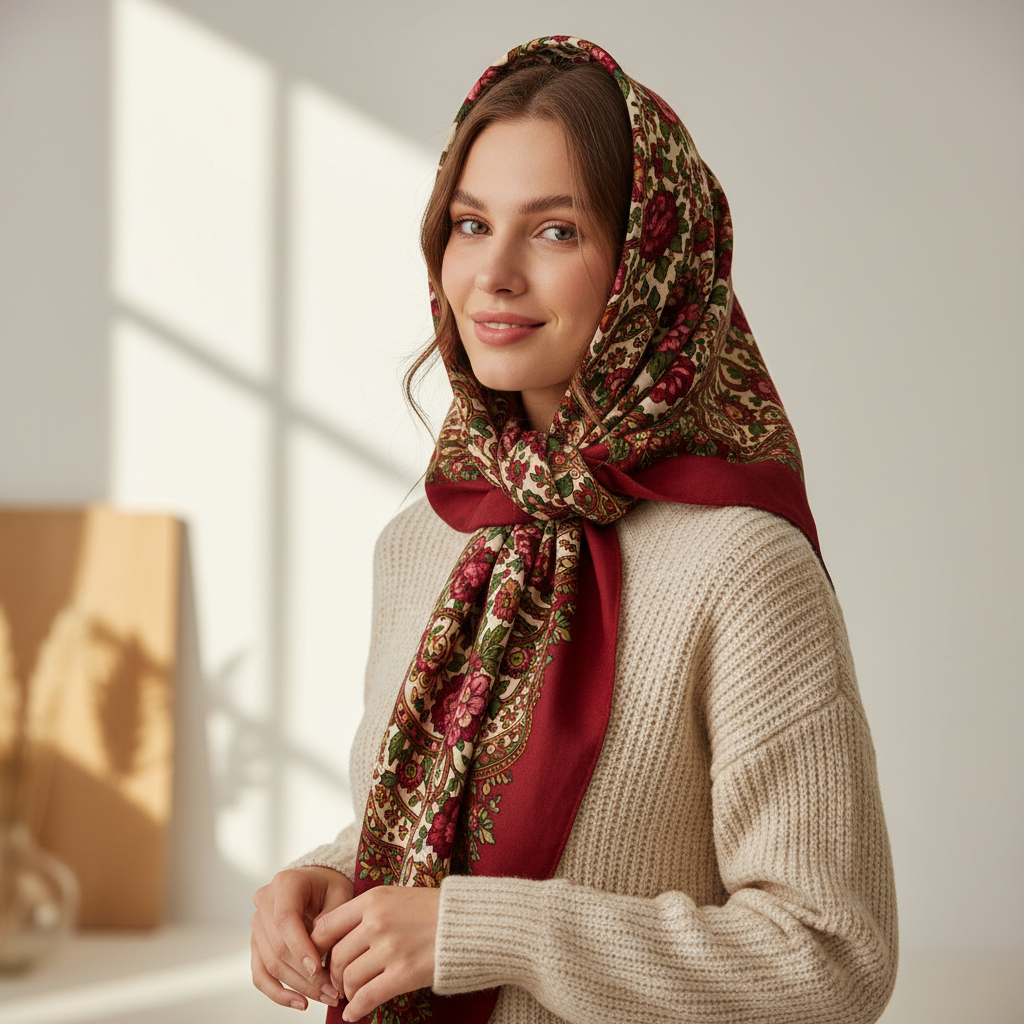
For women's headwear, the requirements shift toward drape and translucency. Voile and chiffon are the primary choices here; voile offers a lightweight, breathable cotton-based structure, while chiffon provides a smoother, more fluid silhouette. Satin is reserved for higher-end, luxury applications where a lustrous finish is the primary objective.
Integrating these materials into a custom scarf project requires an understanding of the target climate. Summer-weight fabrics prioritize airflow and moisture-wicking, whereas winter variations utilize heavier blended wools to ensure thermal retention.
For wholesalers and retailers, the transition from generic sourcing to OEM (Original Equipment Manufacturer) services allows for the creation of a distinct brand identity. This involves more than just attaching a label; it encompasses the selection of specific color palettes, custom dimensions, and the integration of brand-specific embroidery.
True textile customization is achieved when embroidery services are integrated into the weaving process, ensuring that logos and branding are not merely additive but are beautifully incorporated into the fabric's structure.
Xinji Weiwei Textile exemplifies this integrated approach by maintaining a full production line—from weaving and printing workshops to finished product processing. This vertical integration allows for strict quality control over the 50,000 pieces produced daily, ensuring that small custom orders and large-scale mass productions maintain identical standards.
When evaluating which material to use for a specific market, buyers must consider the trade-off between aesthetic luster, durability, and breathability. For example, while satin is visually striking, its breathability is lower than that of cotton voile. Conversely, polyester jacquard offers the highest durability for daily outdoor use.
The following index provides a conceptual framework for comparing the relative performance of the most common materials used in the headscarf industry.
The application of headscarves varies significantly by region. In Sudan, the Sudan Toub represents a critical cultural garment requiring specific fabric weights and printing techniques. In the Arabian Peninsula, the Shemagh's jacquard pattern is not only a fashion choice but a functional tool for protection against sand and sun.
For a retailer evaluating a new collection, the focus should be on regional preferences. For instance, some markets prefer a higher cotton percentage for comfort, while others prioritize the crisp, non-fade properties of high-grade polyester. Ensuring the custom scarf aligns with these local habits is the key to reducing inventory turnover time.
Textile manufacturing has evolved from simple mass production to highly flexible, data-driven customization. The ability to accept smaller customized orders alongside large-scale mass production has lowered the barrier for new fashion brands to enter the market. This flexibility is supported by advanced processing equipment and a deep understanding of international shipping logistics.
Current trends show a move toward "hybrid textiles"—fabrics that combine the aesthetic of silk with the durability of synthetic fibers. This allows for a luxury feel without the prohibitive cost or fragility of 100% pure silk, making high-end designs more accessible to a broader consumer base.
Furthermore, the integration of rapid sampling—such as a 7-day lead time for samples—has accelerated the product development cycle, allowing brands to react to fashion trends in real-time rather than planning seasons a year in advance.
When choosing a manufacturing partner for a custom scarf, buyers should look beyond the unit price. The true cost of procurement includes the precision of the OEM service, the stability of the supply chain, and the efficiency of international shipping methods like DHL or FEDEX.
A critical evaluation factor is whether the factory owns the entire production line. A manufacturer with its own weaving and printing workshops can guarantee consistency in color and pattern across different batches, which is a common failure point when dealing with middlemen or trading companies.
The following table provides a comparative framework for choosing the right material and service level based on the business objective.
| Business Goal | Recommended Material | Key Technical Requirement | Service Level |
|---|---|---|---|
| Luxury Branding | Satin / Silk Blend | High-density weave | Full OEM Customization |
| Daily Casual Wear | Cotton Voile | Breathability/Softness | Standard Customization |
| Traditional Gear | Polyester / Cotton | Single-side Jacquard | Pattern Customization |
| Budget Wholesale | 100% Polyester | Color Fastness | Bulk Mass Production |
| Cultural Apparel | Sudanese Toub Fabric | Specialized Printing | Design-to-Product OEM |
| Seasonal Collection | Blended Wool | Thermal Retention | Rapid Sampling (7-day) |
Jacquard patterns are woven directly into the fabric using a specialized loom, creating a structural, three-dimensional texture that is highly durable and does not fade. Printed patterns are applied to the surface of a finished fabric. For traditional headscarves like the Shemagh, jacquard is the gold standard as it provides the necessary weight and authentic look required for cultural accuracy.
For extreme heat, a blend of cotton and polyester or 100% cotton voile is recommended. Cotton provides the necessary breathability and moisture absorption to keep the wearer cool, while a small percentage of polyester can help the scarf maintain its shape and resist wrinkling during long hours of wear. The choice depends on whether the priority is absolute breathability or a crisp, professional appearance.
Yes, professional OEM services allow for the integration of custom logos through high-precision embroidery or custom weaving. This is particularly effective for corporate identity or brand differentiation. Most integrated factories can accommodate custom logo designs and branding details, provided the order meets a minimum quantity (such as 300 pieces) to justify the setup of the custom embroidery machinery.
Evaluate the manufacturer based on their production integration. A factory that owns the weaving, printing, and finishing workshops can offer better quality control and more competitive pricing than a trading company. Additionally, check their ability to provide rapid sampling (e.g., 7 days) and their experience with international shipping carriers like UPS, DHL, and FEDEX to ensure timely delivery.
Adult sizes are generally categorized into 52, 55, 58, 60, and 62 inches. In metric terms, a 140x140cm square is a very common standard. The size choice is often determined by the regional style of wrapping; some cultures prefer a larger drape for more coverage, while others opt for a smaller, more compact fit for active use.
The cost difference is usually marginal, but the value proposition differs. Voile is typically a cotton-based fabric that is more matte and breathable, making it ideal for daily modesty wear. Chiffon is often synthetic or silk-blend, offering a sheer, elegant look for formal events. The price is influenced more by the quality of the finish and the complexity of the custom design than by the base material itself.
The transition toward a more personalized, high-quality custom scarf market requires a deep synergy between textile engineering and market insight. By prioritizing vertical integration—where weaving, printing, and branding happen under one roof—businesses can achieve a level of consistency and scalability that is impossible through fragmented sourcing.
Whether focusing on the traditional durability of the Shemagh or the elegant fluidity of chiffon and satin, the key to success lies in the technical details: the choice of yarn, the precision of the jacquard loom, and the efficiency of the global logistics chain.