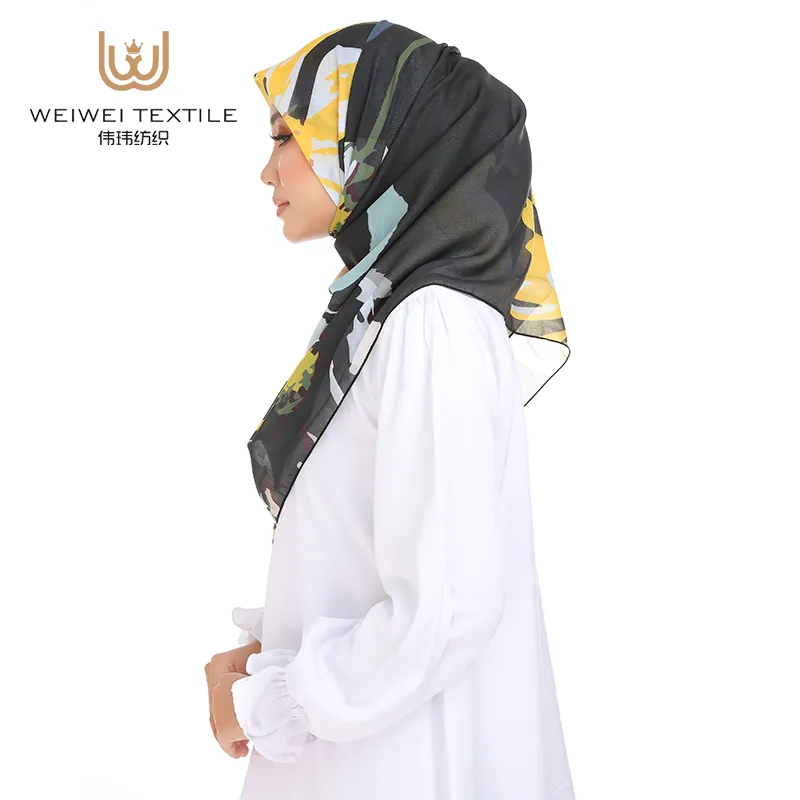
Professional Design Tudung OEM Services for Modest Fashion Brands
Establishing a successful modest fashion brand requires a seamless integration of cultural authenticity and industrial scalability. For entrepreneurs entering the Malaysian and global markets, sourcing a partner capable of high-fidelity design tudung oem services is critical to ensuring that fabric breathability and aesthetic precision meet consumer expectations. The demand for high-quality headscarves has shifted from simple coverage to architectural fashion statements, necessitating a supply chain that can handle both intricate custom prints and mass-market volume.
Xinji Weiwei Textile addresses these complexities by combining vertically integrated production—from weaving and printing to final processing—with a deep understanding of the tropical climate's requirements. By utilizing premium cotton voile and advanced printing techniques, we enable brands to launch diverse collections, ranging from the traditional Bawal square to the contemporary flowy shawl, while maintaining strict quality control across every single piece produced in our 10,000 square meter facility.

The Evolution of Modest Headwear: From Functional Coverage to Fashion Statement
The contemporary hijab landscape in Malaysia and beyond is no longer monolithic. It has evolved into a sophisticated intersection of modesty and avant-garde design. Modern consumers seek a variety of silhouettes, such as the Instant Hijab for efficiency, the Caped Hijab for formal elegance, and Sport Hijabs engineered for moisture-wicking performance. This diversification means that a manufacturer must possess the technical versatility to work with various materials, from lightweight chiffon to stretchable jersey and luxurious satin.
For B2B buyers, the challenge lies in finding a production partner that understands these nuances. A "one-size-fits-all" approach to fabric leads to products that are either too heavy for humid weather or too sheer for modest standards. The industry now demands "material alchemy"—the ability to blend breathability with structural integrity. This is where the expertise in cotton voile becomes paramount, as it remains the gold standard for the Bawal style due to its ability to hold a shape while remaining airy.
Furthermore, the rise of digital fashion and social media trends means that design cycles have accelerated. Brands now require rapid prototyping and short lead times to keep up with viral styles. Our production lines are optimized to bridge the gap between high-fashion conceptualization and industrial reality, ensuring that a designer's vision is translated accurately onto the fabric without losing the integrity of the color palette or the precision of the pattern.

Technical Specifications of Premium Cotton Voile and Fabric Selection
Selecting the right base material is the most critical decision in the manufacturing process. Our primary offering, the premium cotton voile, is specifically engineered for the Malaysian market. With a standard classic size of 115cm x 115cm, this fabric provides the ideal balance of opacity and ventilation. The weave is tight enough to ensure modesty but porous enough to allow heat to escape, making it indispensable for spring and summer collections.
Beyond cotton voile, we implement a diverse material strategy to cater to different market segments:
- Chiffon and Georgette: Ideal for shawls and formal wear, providing a fluid drape and a high-end aesthetic.
- Satin: Utilized for luxury lines where a subtle sheen and smooth texture are required for evening events.
- Jersey and Lycra: Specifically for sport and daily wear, focusing on elasticity and moisture management.
- Viscose: A sustainable alternative that offers a soft touch and excellent dye absorption.
The printing process is where the brand's identity is solidified. We employ advanced printing methods that prevent color bleeding and ensure that intricate geometric patterns or modern Batik motifs remain sharp. Whether it is tone-on-tone embroidery or bold digital prints, the goal is to create a product that does not fade after repeated washing, ensuring long-term customer satisfaction and brand loyalty for our OEM partners.
Strategic Procurement: Navigating OEM Customization and Quality Control
For procurement managers, the risk in textile sourcing often lies in the inconsistency between the sample and the mass-produced batch. To mitigate this, we have implemented a rigorous quality control system that monitors every stage of production—from the raw yarn in the weaving workshop to the final stitch in the processing unit. Our capacity to handle both small customized orders and large-scale mass production allows brands to test the market with limited runs before scaling up.
A critical component of a successful partnership is the Sample Evaluation Phase. We provide samples within a structured timeframe, allowing buyers to verify the hand-feel, drape, and color accuracy. This transparency is essential for ethnic scarves and tudung borong, where subtle differences in fabric weight can impact the final styling and consumer perception. Our delivery window of 7-15 working days is designed to keep the supply chain lean and responsive.
When evaluating a manufacturer, buyers should look beyond the price per piece and consider the "total cost of quality." This includes the durability of the fabric, the precision of the hemline, and the reliability of the delivery schedule. By integrating design, R&D, and production under one roof, we eliminate the communication gaps that typically occur when outsourcing different stages to multiple vendors, resulting in a more cohesive and reliable final product.
Comparative Analysis of Hijab Fabric Applications
| Fabric Type | Breathability | Drape Quality | Primary Application |
|---|---|---|---|
| Cotton Voile | High | Structured | Bawal / Daily Wear |
| Chiffon | Medium | Fluid/Flowy | Formal Shawls |
| Satin | Low | Heavy/Sleek | Evening / Luxury |
| Jersey | Medium | Elastic | Sport / Instant |
| Viscose | High | Soft/Light | Casual Summer |
Market Trends and the Impact of Cultural Synthesis on Design
The Malaysian hijab market is currently experiencing a "Cultural Synthesis," where traditional Malay roots are blending with global fashion influences. We are seeing a significant rise in the use of Modern Batik—digital interpretations of classic motifs in neon or monochrome palettes. This trend requires manufacturers to move away from traditional screen printing toward high-resolution digital printing that can handle complex gradients and precise lines.
Another emerging trend is the "Minimalist Luxe" aesthetic, where the focus shifts from bold prints to the quality of the material itself. This is characterized by solid colors elevated with laser-cut florals or metallic-thread detailing. For the manufacturer, this means a higher demand for precision finishing and a focus on "tonal harmony," where the underscarf and the main hijab match perfectly in hue and saturation.
Furthermore, the influence of social media platforms like TikTok and Instagram has introduced the need for "digital shareability." Reversible designs and magnetic closures are becoming popular because they allow for quick style transitions in short-form videos. By keeping a close eye on these consumer behaviors, we advise our clients on which materials and closures will likely trend in the coming season, transforming our role from a simple factory to a strategic design partner.
Optimizing the Supply Chain for Global Modest Fashion Brands
To maintain a competitive edge in the global market, brands must optimize their procurement cycle. The shift toward "Just-in-Time" inventory means that the ability to accept small custom orders is no longer a luxury but a necessity. This allows brands to launch "capsule collections" that respond to immediate market feedback, reducing the risk of unsold inventory and deadstock.
For international distributors, logistics and certification are the primary hurdles. We ensure that our production processes meet international standards, providing a reliable foundation for export. Our experience at the Canton Fair has taught us that global buyers value consistency above all else. Whether a brand is based in Kuala Lumpur, London, or New York, the expectation for a premium cotton voile hijab is a product that arrives on time, meets the specified dimensions (e.g., 115cm x 115cm), and possesses a consistent finish across 50,000 pieces.
Looking ahead, the industry is moving toward sustainable textiles. The integration of recycled fibers and organic cotton into the production of hijabs is becoming a key selling point for the younger, environmentally conscious generation. As a top manufacturer, we are continuously exploring these new material frontiers to ensure our clients can offer products that are not only beautiful and modest but also ethically produced.
Frequently Asked Questions About Hijab Manufacturing
What is the most suitable fabric for a Malaysian-style Bawal hijab?
Cotton voile is the most suitable fabric for Bawal hijabs. It is preferred because it is lightweight, breathable, and has enough structure to be folded into a triangle and pinned securely under the chin without slipping, making it ideal for hot and humid climates.
Can you handle both small custom orders and mass production?
Yes, our factory is designed to be flexible. We accept small customized orders for brands looking to test new designs or launch limited editions, and we have the capacity for large-scale mass production with a daily output of up to 50,000 pieces.
What is the typical delivery timeframe for a custom order?
Our standard delivery time is between 7 to 15 working days, depending on the complexity of the design and the volume of the order. We also provide samples for evaluation prior to full-scale production to ensure all specifications are met.
Do you offer custom printing and logo integration?
Absolutely. We provide comprehensive customization options, including custom patterns, brand logos, and various printing methods. Our integrated printing workshop ensures that colors are vibrant and designs are precisely executed according to your artwork.
What are the standard sizes for square hijabs?
The most common classic size is 115cm x 115cm, though we also produce 120cm x 120cm and other custom dimensions based on the specific requirements of the brand or the target market's preference.
How do you ensure the quality of the fabric across large batches?
We employ a complete quality control system that spans our weaving, printing, and finished product processing workshops. Every batch is inspected for material consistency, print accuracy, and stitching quality before packaging into individual OPP bags.
Industry Resources and Technical References
- Textile World - Global Fabric Trends and Innovations
- World Trade Organization - Textile Trade Regulations
- ISO Standards for Textile Quality Management
- Cotton Inc - Technical Guides on Cotton Voile Properties
Choosing the right manufacturing partner is the cornerstone of a successful modest fashion brand. By combining technical expertise in cotton voile with a responsive production model, we help our clients turn creative visions into market-leading products. We invite you to explore our customization capabilities and request a sample to experience the quality firsthand.
Industry Insights and Manufacturing Updates