Regional Analysis
The Textile and Scarf Market Landscape in Greece
Understanding the unique intersection of cultural demand and commercial import needs in the Mediterranean region.
Greece serves as a strategic gateway for the distribution of religious and cultural textiles in Southern Europe. The market is characterized by a diverse demand for modest wear, particularly for the growing Muslim community and an appreciation for vibrant, high-quality African-inspired textiles. Local retailers typically rely on imports from East Asia and the Middle East, creating a high demand for manufacturers who can combine competitive pricing with strict quality controls. The business environment in Greek urban centers like Athens requires a steady supply of breathable fabrics due to the Mediterranean climate, making voile and chiffon highly sought-after materials for daily wear.
Current trends indicate a shift toward "affordable luxury," where consumers seek high-aesthetic value without extreme price points. This has led to an increase in the popularity of affordable silk scarves that offer the sheen of premium silk with the durability of modern blends. Furthermore, there is a rising interest in eclectic fashion, driving the demand for african head scarf styles among broader fashion demographics. Digital transformation in the Greek retail sector is also pushing wholesalers to demand faster turnaround times and more flexible, small-batch customized orders to test new designs in real-time.
The outlook for the Greek textile import market remains positive, though it is constrained by strict EU quality and safety regulations. Companies that can provide verifiable certificates of quality and consistent material compositions have a significant competitive advantage. The opportunity lies in providing "highly customized product solutions" that cater to specific local tastes, such as tailored color palettes for the Mediterranean summer. As the market evolves, the integration of sustainable production methods and the ability to offer a one-stop-shop from weaving to finished product will be the primary drivers for long-term partnerships between Greek importers and international factories.
Industry Journey
Evolution of Global Scarf Manufacturing
From traditional weaving workshops to high-tech, integrated production lines.
Early Phase
Fragmented Production
Manufacturing was split between separate weaving and dyeing houses, leading to long lead times and high quality variance in basic muslim scarves.
Growth Phase
Integrated Workshops
The transition toward owning multiple workshops (weaving, printing, processing) allowed factories to control the full value chain and reduce costs.
Current Phase
Customization Era
Modern production now emphasizes R&D and deep customer insight, enabling highly customized solutions and small-batch agile manufacturing.
The Rise of Material Blending
Industry evolution has seen a move from pure silk to sophisticated blends that maintain a luxury feel while increasing durability and lowering the price point, making high-end aesthetics accessible to a wider consumer base.
Digital Print Integration
The shift from traditional screen printing to advanced digital printing has allowed for more intricate patterns and faster prototyping, essential for the rapidly changing trends in African head wraps and hijab fashion.
Ethical Manufacturing Shifts
Global demand now prioritizes transparency in the production process. The evolution toward integrated factories allows for better oversight of labor conditions and material sourcing throughout the entire production cycle.
Future Outlook
Key Trends Shaping the Modern Textile Market
Analyzing the drivers of change in the global muslim scarf and head wrap industry.
Hyper-Personalized Design
Customers are moving away from generic patterns toward personalized aesthetics. This trend requires factories to offer deep R&D and flexible design services to meet individual brand identities.
Eco-Conscious Material Sourcing
Increasing demand for organic cotton and recycled polyester is pushing manufacturers to innovate in raw material procurement without compromising the softness of voile or satin.
Direct-to-Consumer Logistics
The growth of e-commerce is forcing B2B manufacturers to support smaller, more frequent shipments and provide high-quality photography-ready products for online listings.
Cross-Cultural Fashion Fusion
Combining traditional African patterns with modern modest wear cuts is creating a new market segment, necessitating versatility in printing and fabric selection.
The convergence of these trends suggests that the future of textile manufacturing lies in "Agile Production." For manufacturers, this means investing in modular production lines where a single setup can pivot from mass-producing basic abaya scarves to executing a limited-edition run of intricate African wraps. This agility is driven by the rise of social media, where a specific pattern can go viral overnight, requiring an immediate and high-quality response from the factory to the retail shelf.
Furthermore, technical innovation in the "finishing" stage is becoming a primary differentiator. As consumers in Greece and beyond become more discerning, the focus has shifted from just the print to the tactile feel and the precision of the edges. This is why the integration of a dedicated finished product processing workshop is no longer an option but a necessity for factories aiming to maintain a TOP manufacturer status in the global hijab and head wrap market.
Application Scenarios
How Our Textile Solutions Meet Local Greek Needs
Practical implementations of our manufacturing capabilities for diverse commercial applications.
01
Athens Boutique Modest Wear Collection
A high-end boutique in Athens requires a line of chiffon hijabs with specific seasonal colors. By utilizing our integrated printing workshop, we provide precise color matching and small-batch customization, allowing the boutique to launch a limited collection that avoids the risk of overstocking while maintaining a premium feel.
02
Thessaloniki Wholesale African Fabric Hub
A large-scale wholesaler specializing in african head wraps needs consistent mass production. We leverage our 50,000-piece daily capacity and full-chain weaving process to deliver large volumes of consistent, high-density fabric, ensuring the wholesaler can maintain steady inventory across multiple retail outlets.
03
Religious Center Uniform Supplies
Local community centers require standardized, durable, and breathable abaya scarves for large groups. We provide high-durability voile fabrics with industrial-grade finishing, ensuring the scarves withstand frequent washing and daily wear in the warm Mediterranean climate.
04
E-commerce Startup for Luxury Wraps
A new online venture focusing on affordable silk scarves requires prototypes for a digital marketing campaign. Our R&D team develops sample runs of satin blends, providing the necessary high-sheen aesthetics for photography while ensuring the price point remains accessible for the target youth market.
05
Custom Sudanese Toub Specialized Import
A specialized importer in Greece seeks authentic Sudanese Toub with specific traditional patterns. Our factory employs specialized weaving and printing techniques to replicate authentic designs, delivering a fully finished product that meets the strict cultural authenticity requirements of the niche market.
Deployment Context
Representative Operational Perspectives
Illustrating how our integrated manufacturing model supports different buyer profiles.
Transitioning to a manufacturer with a full production chain—weaving, printing, and processing—has eliminated the lead-time unpredictability we faced previously. The ability to customize small batches for niche styles while having the capacity for mass production is a critical advantage for our retail growth.
Consistency in fabric density and color is the most challenging part of sourcing African head wraps. Having a partner with a dedicated QC system and an integrated workshop ensures that the product delivered matches the prototype exactly, reducing our return rates significantly.
For our e-commerce specialized lines, the ability to iterate on designs through a professional R&D team is invaluable. The transition from a conceptual design to a finished satin scarf with a high-quality edge is seamless, allowing us to compete on quality and speed.
Our Heritage
Xinji Weiwei Textile: A Legacy of Quality
Two decades of excellence in the specialized textile manufacturing industry.
2004
Factory Foundation
Established in Shijiazhuang city, Hebei province, Xinji Weiwei textile began its journey focusing on foundational weaving capabilities to serve the textile market.
Expansion Era
Infrastructure Integration
Expanded the facility to cover 10,000 square meters, integrating weaving, printing, and finished product processing workshops to form a complete production line.
Modernization
TOP Manufacturer Status
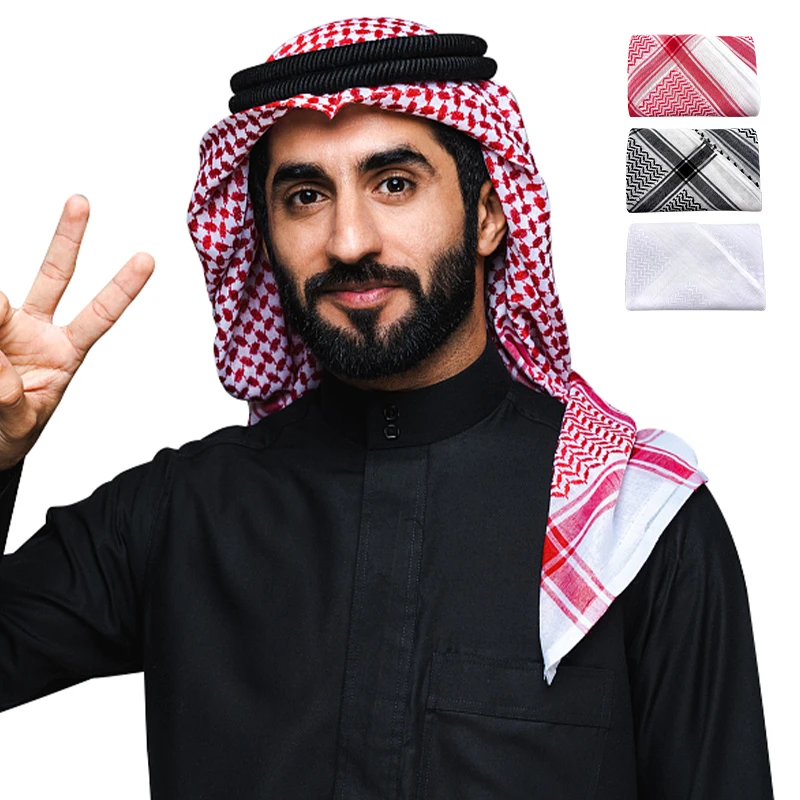
Evolved into a TOP manufacturer integrating design, R&D, production, and sales, specializing in Sudanese Toub and high-end muslim scarves for a global clientele.
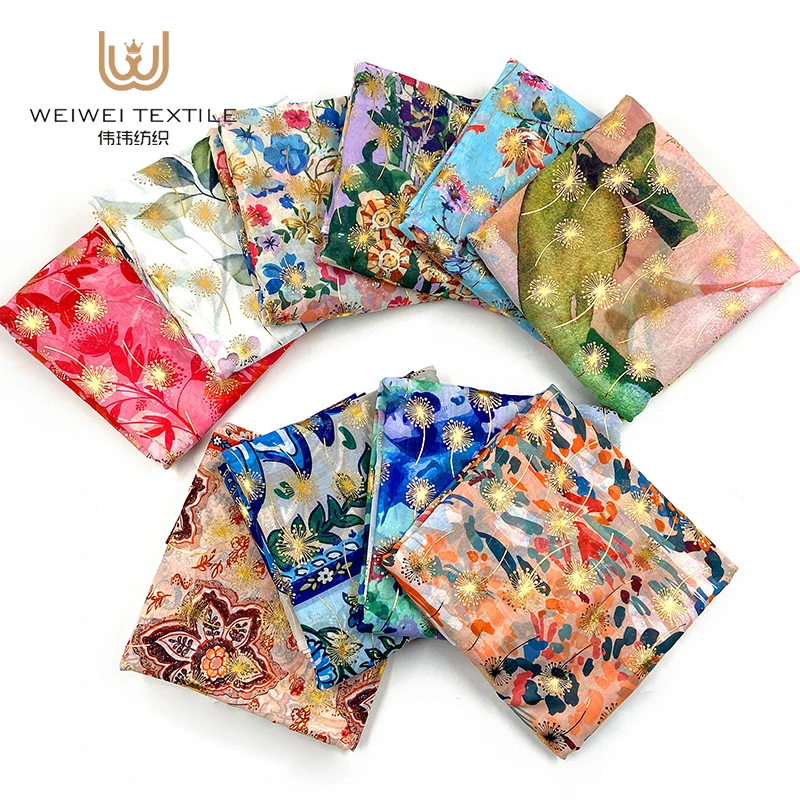
Sudanese Women Toub With Gold Stamping

OEM printing muslim women hijab
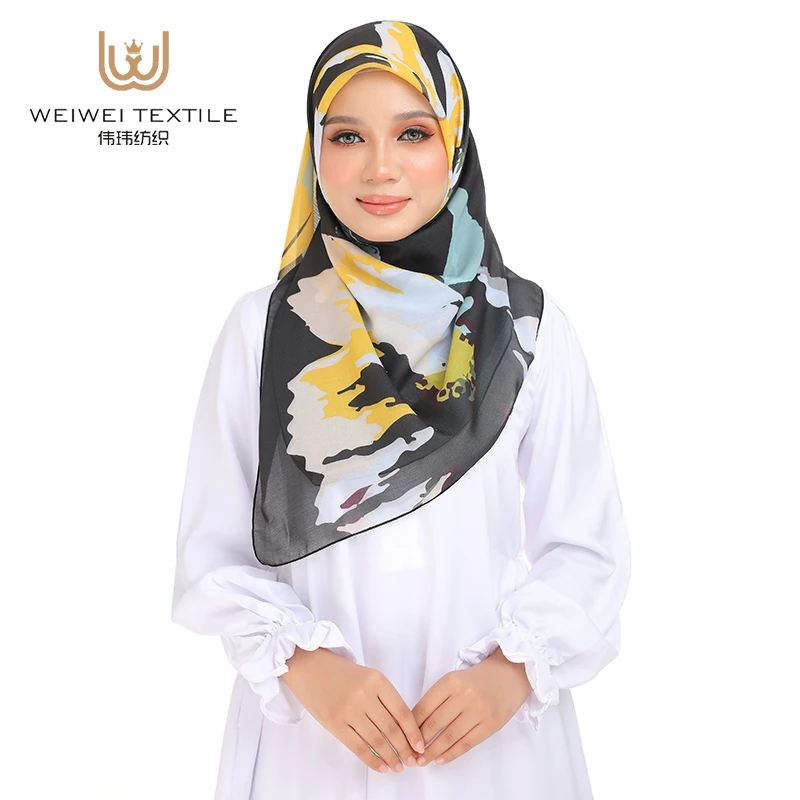
Scarf Weiwei Custom Printed The Newest Designs
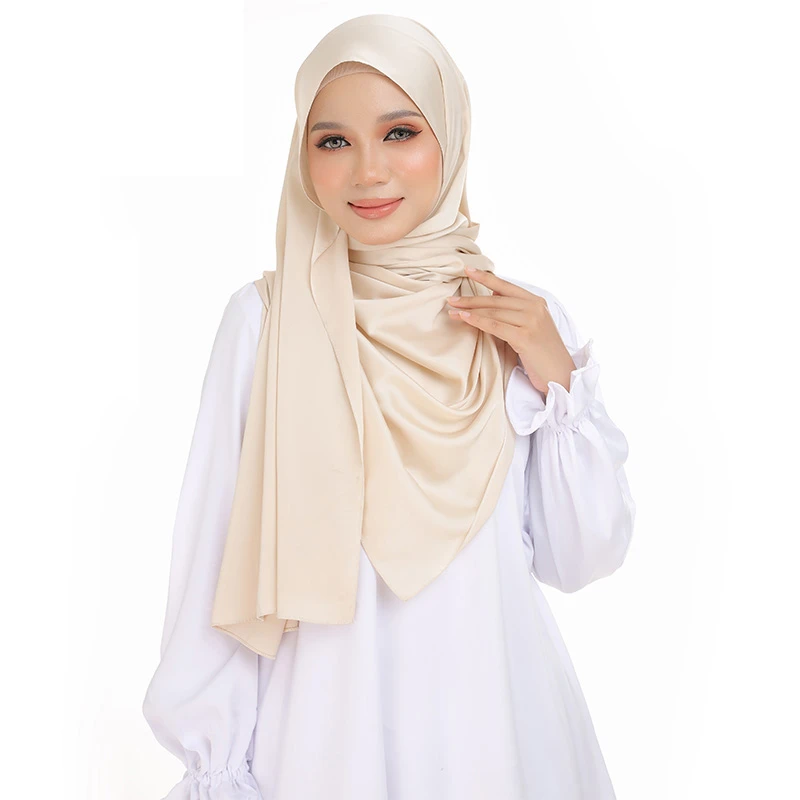
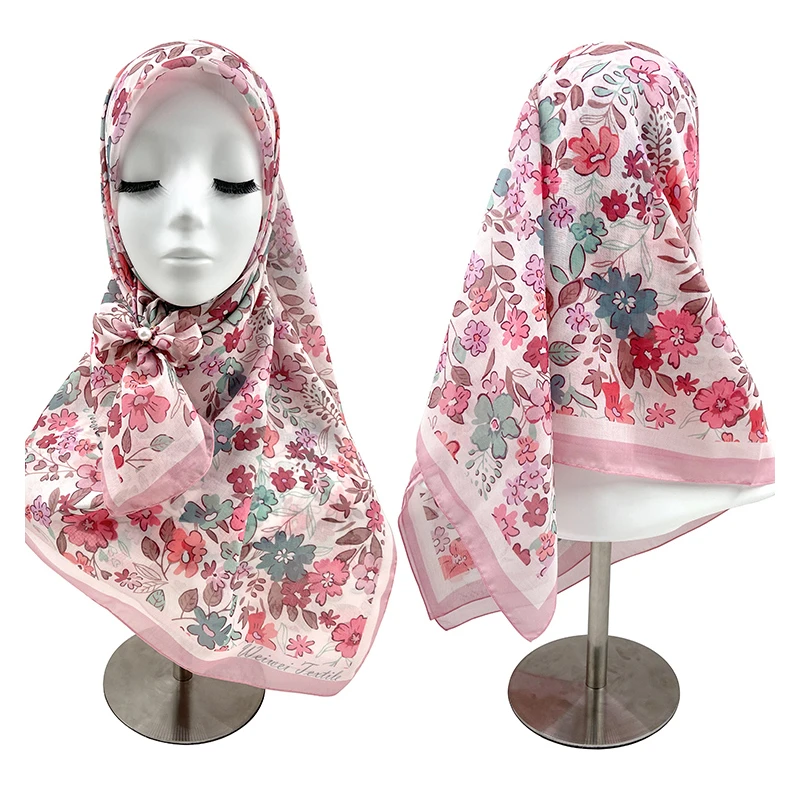
115×115cm Luxury Fashionable Satin Square Scarf
Common Inquiries
Frequently Asked Questions About Textile Sourcing
Detailed answers to help you make informed procurement decisions.
What materials are available for customized muslim scarves and hijabs?
We offer a wide range of professional-grade fabrics including voile, chiffon, and satin. Each material is chosen for its specific properties: voile for breathability, chiffon for its elegant drape, and satin for a luxury sheen. Depending on the end-use, we can adjust the weave density and finish in our weaving workshop to ensure the product meets your exact requirements for opacity and texture.
Can you handle small customized orders for new design launches?
Yes, we explicitly accept small customized orders. We understand that retail boutiques in Greece often need to test new patterns or seasonal colors before committing to mass production. Our integrated production line allows us to pivot quickly between large-scale runs and smaller, specialized batches without sacrificing quality, providing an ideal partnership for agile fashion brands.
How do you ensure color consistency across different production batches?
Color consistency is managed through our internal printing workshop where we use standardized dye formulas and precision calibration. Every batch is compared against a master sample during the printing process. Our quality control system identifies any drift early, ensuring that the final product delivered to your warehouse in Greece is visually identical to the approved sample.
What is the typical production lead time for a mass order of 50,000 pieces?
Our daily production capacity is 50,000 pieces, meaning we can execute large-scale orders extremely rapidly. Because we own the weaving, printing, and finishing workshops, we eliminate the delays typical of outsourced production. The exact lead time depends on the complexity of the design, but most mass orders move through our full production line with significant efficiency compared to fragmented suppliers.
Are your Sudanese Toub and African scarves culturally authentic in design?
Authenticity is achieved through our dedicated R&D and design team, who study the specific patterns and fabric requirements of Sudanese and African textiles. We integrate this knowledge into our weaving and printing processes, ensuring the final product reflects the traditional aesthetics while benefiting from modern industrial quality standards and durability.
How can I start the process for a customized hijab collection?
The first step is to share your design requirements, including material preference (voile, chiffon, satin) and color palettes. Our team will provide a technical consultation to determine the best production path. Once the design is finalized, we can produce samples for your approval before moving into either a small customized run or full mass production, depending on your market needs.
Ready to Scale
Optimize Your Textile Supply Chain in Greece Today
Whether you are a boutique owner in Athens seeking a limited collection of elegant hijabs or a large-scale wholesaler requiring thousands of consistent African wraps, our integrated factory is built to support your growth. Experience the benefit of a manufacturer that combines R&D design with a massive daily capacity of 50,000 pieces to ensure your business never misses a seasonal trend.
Discuss Your Requirements