Industry Analysis
The Landscape of Modest Fashion in Cambodia
Evaluating the intersection of cultural requirements and textile supply chains in the region.
The modest fashion market in Cambodia is characterized by a blend of traditional values and contemporary global influences. Importers typically seek high-quality fabrics that can withstand high humidity while providing the necessary opacity for religious modesty. The demand is centered around versatile pieces like the abaya scarf, which serves as both a cultural staple and a fashion statement. Because Cambodia acts as a hub for diverse Southeast Asian trade, there is a significant requirement for wholesalers who can provide a wide spectrum of fabric weights, from ultra-light voile for daily wear to luxurious satin for formal occasions.
Current market trends indicate a shift toward "affordable luxury," where consumers demand the look and feel of high-end silk but at a more accessible price point. This has driven a surge in the demand for affordable silk scarves that utilize advanced printing techniques to mimic traditional weaves. Furthermore, there is an increasing interest in cross-cultural styles, including a growing market for african head wraps and scarves, as global fashion connectivity increases through digital commerce and social media, expanding the traditional modest wear portfolio.
The primary constraint for Cambodian businesses remains the volatility of the supply chain. Dependence on fragmented manufacturers often leads to inconsistent product batches. However, the opportunity lies in partnering with vertically integrated factories that control everything from weaving to finishing. By reducing the number of intermediaries, importers can achieve better margins and faster turnaround times. The outlook for the industry is positive, with a trajectory toward highly customized, brand-specific collections that move away from generic mass-market imports toward curated, design-led assortments.
Manufacturing Growth
Evolution of Modest Wear Production
The transition from basic weaving to integrated, design-driven textile manufacturing.
Early Stage
Foundation & Weaving
Established in 2004, the focus was on building a robust weaving infrastructure to produce base fabrics, establishing a reputation for stability and material consistency in Hebei province.
Expansion
Vertical Integration
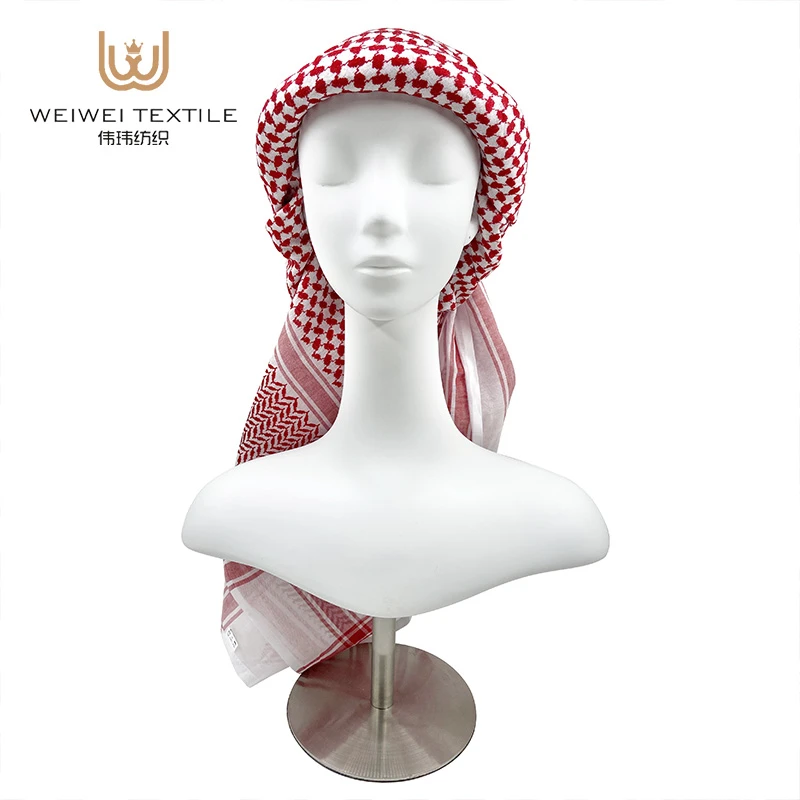
Integrated printing and finished product processing workshops, allowing the factory to move from raw fabric supply to completed muslim scarves and Sudanese Toub.
Current
Design & R&D Hub
Transformed into a TOP manufacturer integrating R&D, focusing on high-customization and diverse material portfolios including voile, chiffon, and satin for global markets.
From Mass Production to Precision Customization
The industry has moved beyond simple volume. Modern clients now require specific technical attributes—such as precise GSM (grams per square meter) for chiffon—and unique print alignments that require integrated R&D capabilities rather than just machinery.
Material Diversification Strategies
There is a clear evolution in fabric blending. The transition from pure synthetics to breathable, high-performance blends allows modest wear to be worn comfortably in extreme climates, expanding the utility of the african head scarf across diverse geographies.
Digital Integration in Textile Sourcing
The shift toward direct-from-factory sourcing allows importers to bypass multiple layers of agents. This evolution empowers buyers to implement "just-in-time" inventory management, reducing waste and improving the speed of trend adoption.
Future Outlook
Global Shifts in Textile Demand
Analyzing the drivers of change in the modest fashion and head-wrap industry.
Eco-Conscious Fabric Sourcing
Increasing demand for sustainably produced textiles is pushing manufacturers toward low-impact dyes and recycled polyester blends without sacrificing the luxury feel of satin.
Hyper-Local Aesthetic Adaptation
The rise of regional style influencers is driving the need for "micro-collections" that feature specific colors and prints tailored to the cultural tastes of specific cities.
Digital-to-Physical Sampling
AI-driven design tools are allowing buyers to visualize prints on 3D models before physical production, significantly reducing sample waste and approval cycles.
Multi-Functional Fabric Use
There is a trend toward "hybrid" fabrics that offer the drape of silk with the durability of polyester, making them suitable for both everyday use and high-fashion events.
The convergence of these trends suggests a market that is moving away from commoditized textile production toward a service-oriented manufacturing model. For companies operating in Cambodia, this means the value is no longer just in the fabric itself, but in the ability to adapt that fabric to rapidly changing consumer behaviors. The integration of R&D into the production line allows for a faster "feedback-to-factory" loop, ensuring that the latest colors and textures are available in the market before the trend peak.
Furthermore, the professionalization of the supply chain—evidenced by the shift toward TOP manufacturers who can handle design, research, and mass production—reduces the operational friction for retailers. By partnering with factories that possess complete production lines, businesses can maintain higher quality standards and implement more agile inventory strategies, which is essential for competing in the fast-paced environment of global modest fashion.
Practical Applications
Deployment of Textiles in Real-World Trade
How our manufacturing capabilities translate into commercial success for different business models.
01
Phnom Penh Boutique Custom Collection
A local luxury boutique requires a limited run of high-end abaya scarf designs using premium satin. In the humid environment of the capital, they need a fabric that retains its luster without feeling heavy. By utilizing our "small order customized" service, the boutique can test five unique patterns with low volume, reducing financial risk while offering an exclusive product line that differentiates them from mass-market retailers.
02
Regional Wholesaler Mass Distribution
A large-scale distributor supplying across Cambodia and neighboring regions needs 100,000 pieces of standard voile hijabs for the upcoming season. They require strict color uniformity across multiple batches to maintain brand consistency. Our daily capacity of 50,000 pieces and integrated printing workshop ensure that mass production is achieved without the "batch variance" common in smaller factories, allowing the wholesaler to maintain high trust with their retail network.
03
Cross-Cultural Fashion Importer
An importer specializing in diverse headwear seeks to introduce african head wraps to the local market. They need fabrics that provide high structural integrity for complex wrapping styles but remain breathable. Our R&D team suggests a specific weave density that supports the wrap's shape while ensuring comfort, combining our technical expertise in textile research with the client's market knowledge to create a viable new product category.
04
E-commerce Startup "Affordable Luxury"
An online store targeting Gen-Z consumers focuses on affordable silk scarves with modern, minimalist prints. To compete with fast-fashion giants, they need rapid prototyping and quick turnaround. By leveraging our integrated production line, the startup can move from a digital design to a physical sample and then to a small production run in a fraction of the time required by traditional fragmented supply chains.
05
Corporate Gift Procurement
A corporate entity requires branded, high-quality scarves for diplomatic gifts, necessitating a blend of elegance and prestige. They opt for our premium satin with custom logo embroidery. Our perfect quality control system ensures that every single piece meets the same rigorous standard, providing a consistent professional image that is critical for high-stakes corporate and diplomatic gifting scenarios.
Representative Perspectives
Typical Operator Use Cases
Illustrating the impact of vertically integrated manufacturing on diverse business models.
For a retail operator, the ability to order small customized batches is a game-changer. It allows us to test new patterns in the local market without committing to massive inventory. The consistency in fabric weight across the voile and chiffon ranges ensures that our customers receive a professional product every time, which has significantly reduced our return rates.
In large-scale distribution, production capacity is everything. Having a partner that can deliver 50,000 pieces daily with an integrated printing workshop means we no longer struggle with mismatched colors between shipments. The vertical integration from weaving to finishing eliminates the errors usually introduced by third-party contractors.
Sourcing for specific cultural headwraps requires a technical understanding of fabric tension and breathability. Working with a manufacturer that has its own R&D department allows us to specify exact requirements for head-wrap stability. This technical collaboration ensures the product is not only beautiful but functional for the end user.
Company Legacy
Xinji Weiwei Textile: A Legacy of Precision
Two decades of commitment to textile excellence and manufacturing innovation.
2004
Company Foundation
Xinji Weiwei textile was built in 2004, located in Shijiazhuang city, Hebei province. From the beginning, the company focused on establishing a strong foundation in weaving, utilizing a facility that eventually grew to cover 10,000 square meters to support large-scale textile production.
Growth Phase
Production Integration
The company expanded its capabilities by establishing its own weaving workshop, printing workshop, and finished product processing workshop. This allowed for the specialized production of Sudanese Toub and muslim scarves as the core products of the enterprise.
Modern Era
R&D and Global Scaling
With 500 elite employees and a daily capacity of 50,000 pieces, the factory evolved into a TOP manufacturer. By integrating design and R&D, the company now provides highly customized solutions for voile, chiffon, and satin hijabs to a global clientele.
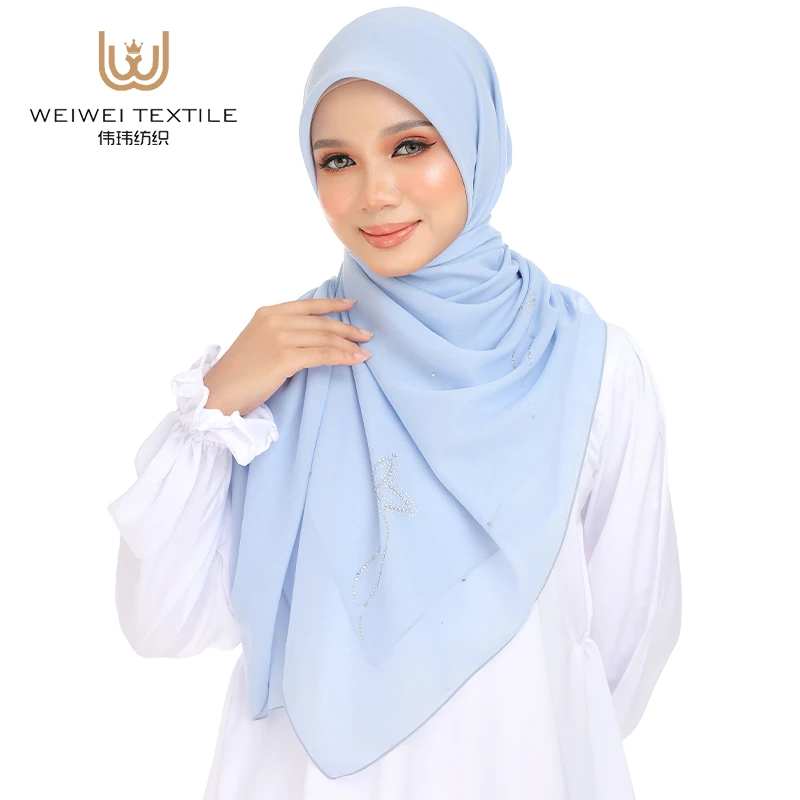
Ethnic Beautiful Drill Plain Square Scarf For Women
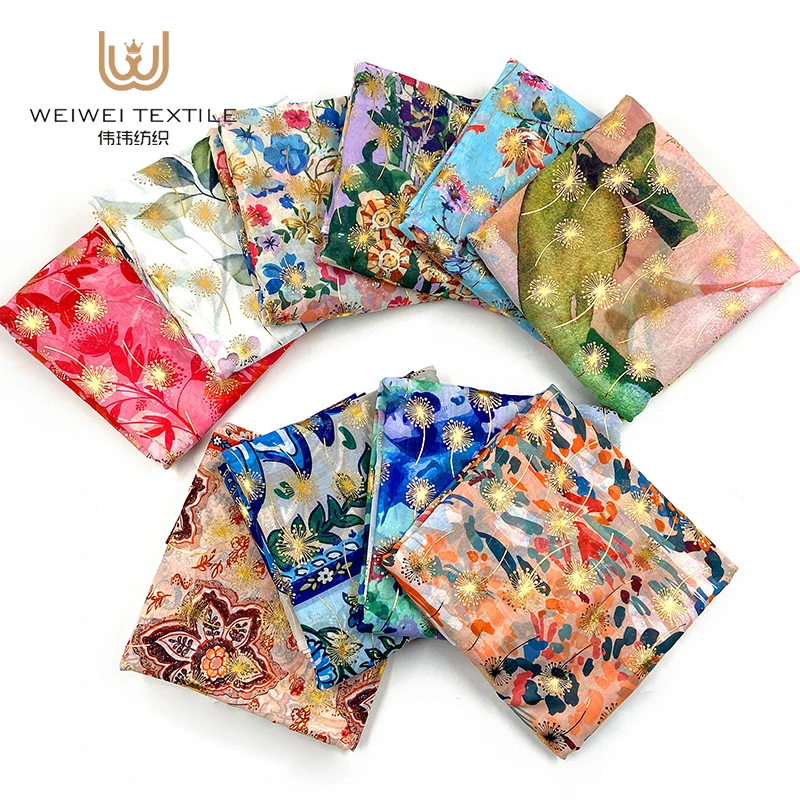
Sudanese Women Toub With Gold Stamping
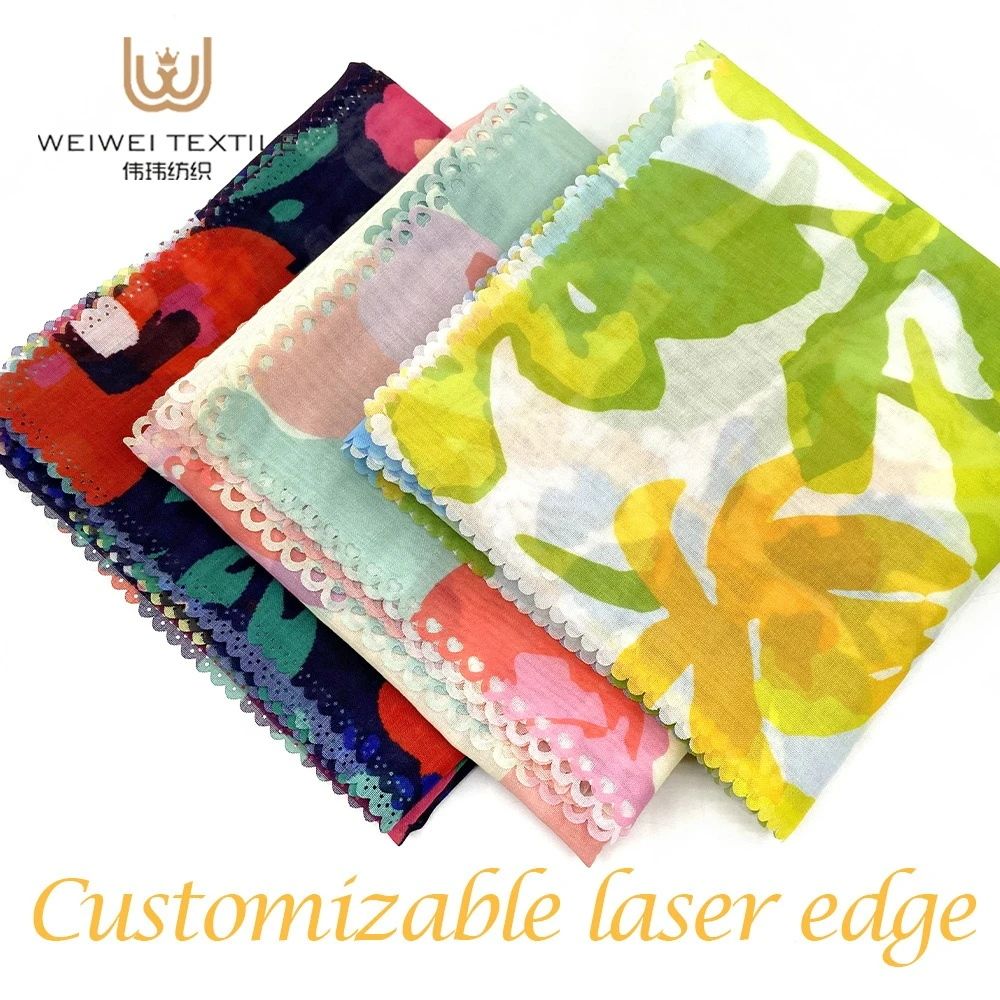
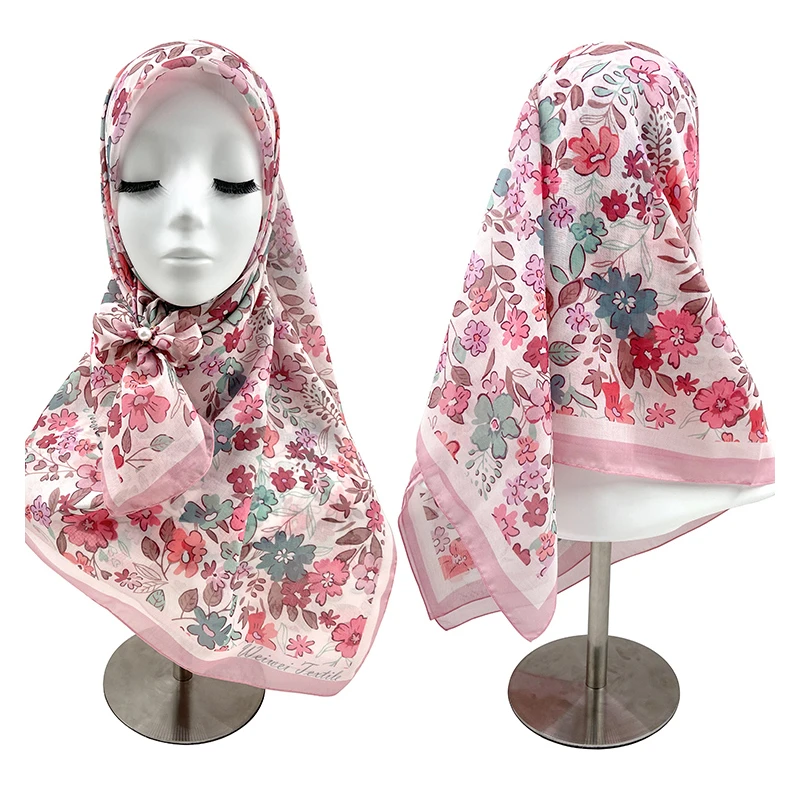
Waterproof Cotton Voile Muslim Printed Headscarf Hijab
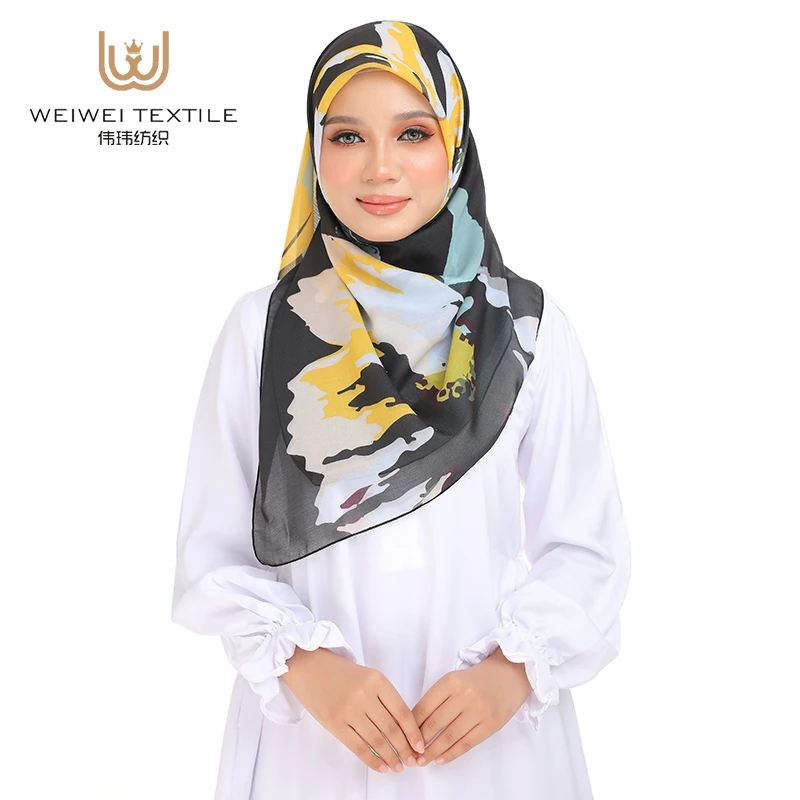
Scarf Weiwei Custom Printed The Newest Designs
Common Inquiries
Textile Sourcing & Customization FAQ
Technical and operational answers for professional textile importers.
What fabric types are available for customized muslim scarves?
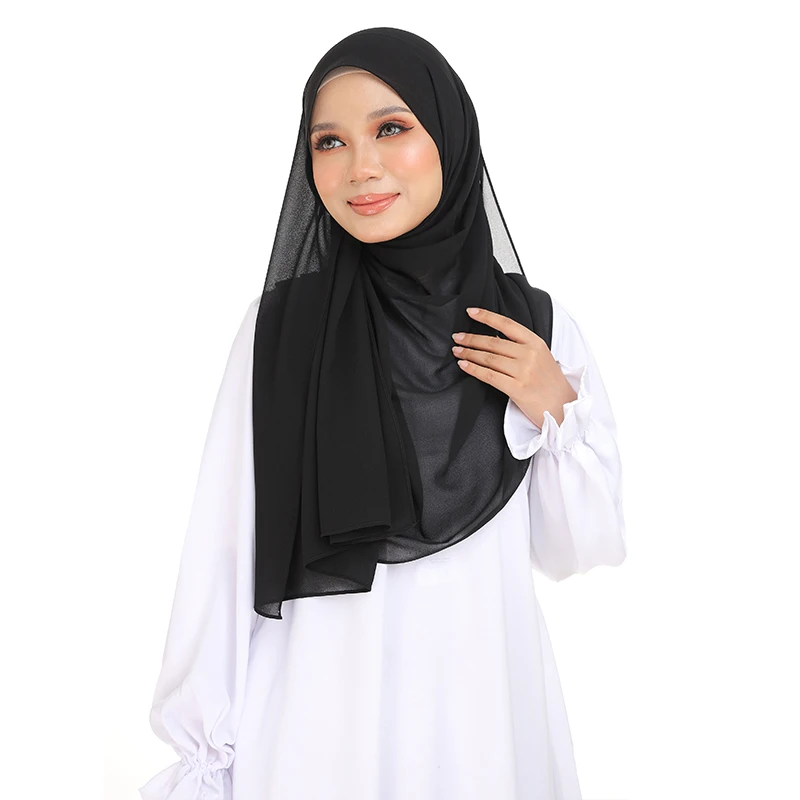
We specialize in high-quality voile, chiffon, and satin. Voile is ideal for daily wear due to its breathability, chiffon offers a lightweight and elegant drape suitable for formal modest wear, and satin provides a luxurious sheen for high-end collections. Because we own our weaving and printing workshops, we can customize the weight, opacity, and finish of these fabrics to meet your specific regional requirements.
Can you handle small customized orders for niche fashion boutiques?
Yes, our factory is designed to be flexible. While we have the capacity for mass production of 50,000 pieces daily, we specifically accept small customized orders to help boutiques test new designs or launch limited edition collections. This allows buyers to minimize inventory risk while still benefiting from our professional-grade quality control and R&D capabilities.
How do you ensure color consistency across large mass production orders?
Consistency is achieved through vertical integration. By owning the printing workshop and implementing a perfect quality control system, we eliminate the variance typically caused by outsourcing. We use standardized color matching and rigorous testing at each stage of the production line—from the initial weave to the final print—ensuring that the first piece matches the 50,000th piece exactly.
What is the typical process for developing a custom design for head wraps?
The process begins with a deep understanding of the customer's needs. Our R&D team works with you to select the appropriate fabric (e.g., voile for breathability or satin for luxury) and finalize the print design. We then produce a physical sample for your approval. Once the sample is verified, we move to the production line, utilizing our integrated workshops to ensure the final product matches the approved sample perfectly.
Do you provide products specifically for the Sudanese and African markets?
Yes, Sudanese Toub and specialized muslim scarves are the main products of our enterprise. We have extensive experience in the technical requirements for these products, including the specific dimensions and fabric weights preferred in African and Middle Eastern markets. Our ability to combine traditional requirements with modern manufacturing allows us to supply high-quality african head wraps and scarves globally.
How can I start a partnership for importing scarves into Cambodia?
The first step is to define your requirements regarding fabric type, quantity, and customization needs. You can provide your specifications through our contact channel, and our team will offer a tailored solution. Whether you are a boutique looking for small custom runs or a wholesaler needing mass production, we provide a streamlined process from design and R&D to final shipping and delivery.
Ready to Scale
Secure Your Premium Textile Supply Chain in Cambodia
Whether you are launching a new boutique line or managing regional distribution, Xinji Weiwei Textile provides the manufacturing stability and design flexibility you need. From professional african scarf production to high-volume hijab orders, our integrated facility in Hebei ensures quality and speed. Contact us today to discuss your specific fabric requirements and request a tailored production quote for your Cambodian business.
Discuss Your Requirements